
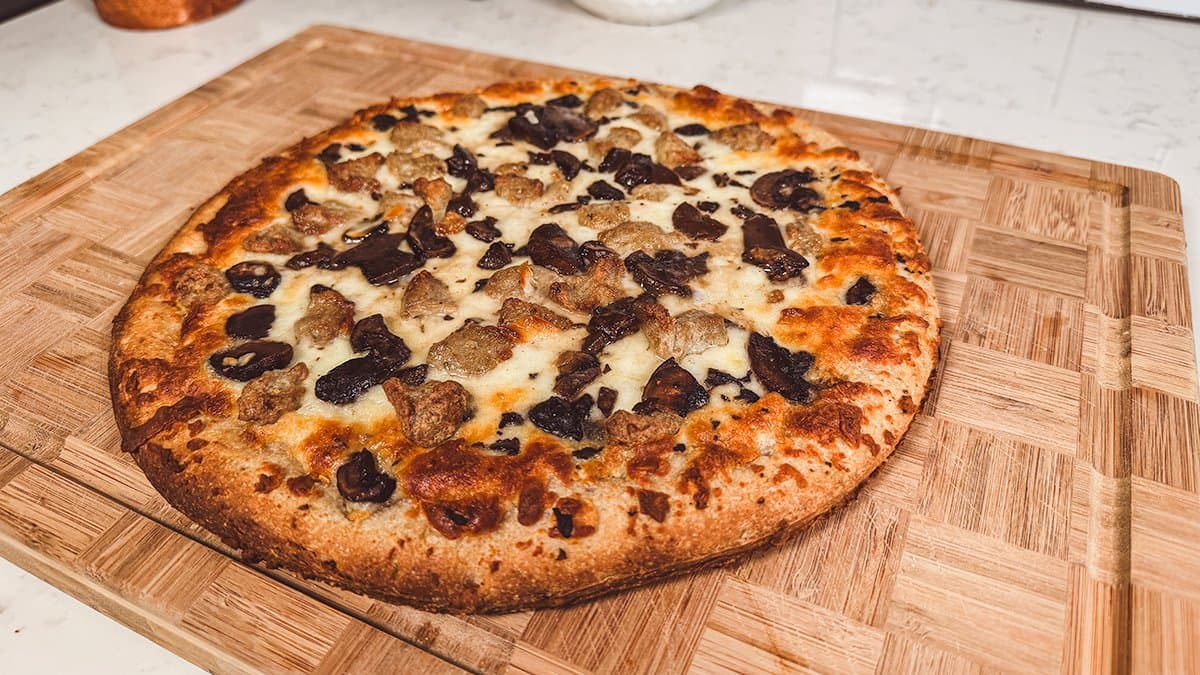
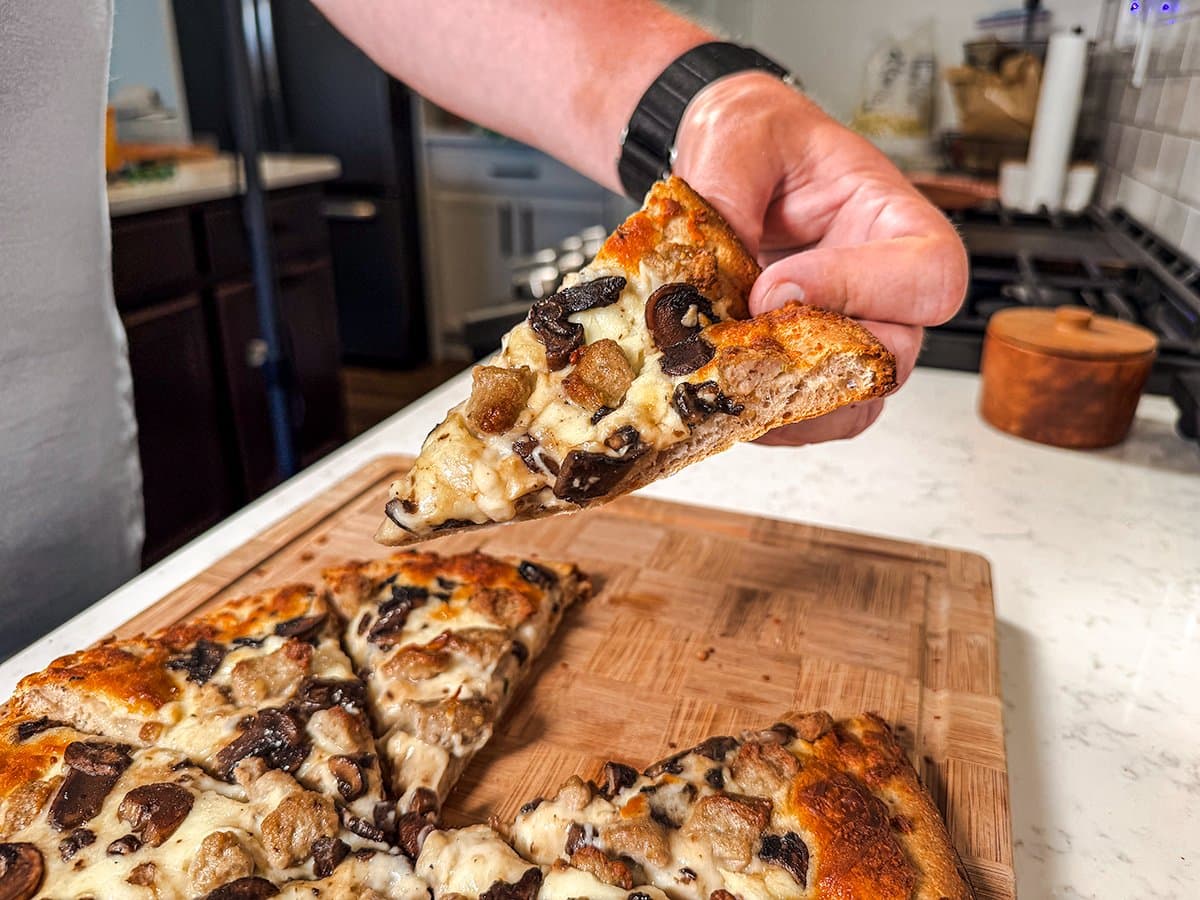
Does your frozen pizza look great coming out of the oven, but the crust is soggy when you take your first bite? The cheese was right. The edges were right. Then you picked up a slice and the tip folded over like it was embarrassed to be there. Here's how to make sure your frozen pizza has a crispy crust every time.
Nine times out of ten, soggy crust isn't the pizza's fault, and it isn't your oven being cheap. Soggy crust is a heat and moisture problem, and it typically happens in the last four minutes, while the pizza is resting after it's been taken out of the oven.
The good news is that fixing soggy crust costs nothing. No stone, no steel, no perforated screen, no countertop oven with a name like a sports car. You mostly need to preheat the oven longer than feels reasonable, keep the crust off anything cold on the way in and on the way out, and resist the urge to cut into the pizza the second it's done. Below are the six tips you should always follow, and then the one move at the end that will change your frozen pizza for the rest of your life.
Soggy crust is a moisture problem
A frozen pizza walks into your oven carrying water, and that water is the whole story. Sauce has it, cheese has it, vegetables have a lot of it, and the crust has some locked up as ice. Your oven's real job is turning all of that into steam and getting the steam out of the building. Anything that traps it underneath, a cool sheet pan, a dinner plate, a sheet of foil, quietly undoes an oven's worth of work in about ninety seconds.
Ours has a wrinkle worth knowing. Every Real Dough pizza is baked in our kitchen before it's ever frozen, so the crust going into your oven has already been through one. You're not building crust structure out of raw dough. You're driving moisture back out of a crust that's already built, and browning it on the way.
Which means three levers matter and not much else does: how much heat your oven has actually stored, how directly it touches the bottom of the crust, and whether the steam has anywhere to go.
Six tips for a crispy crust
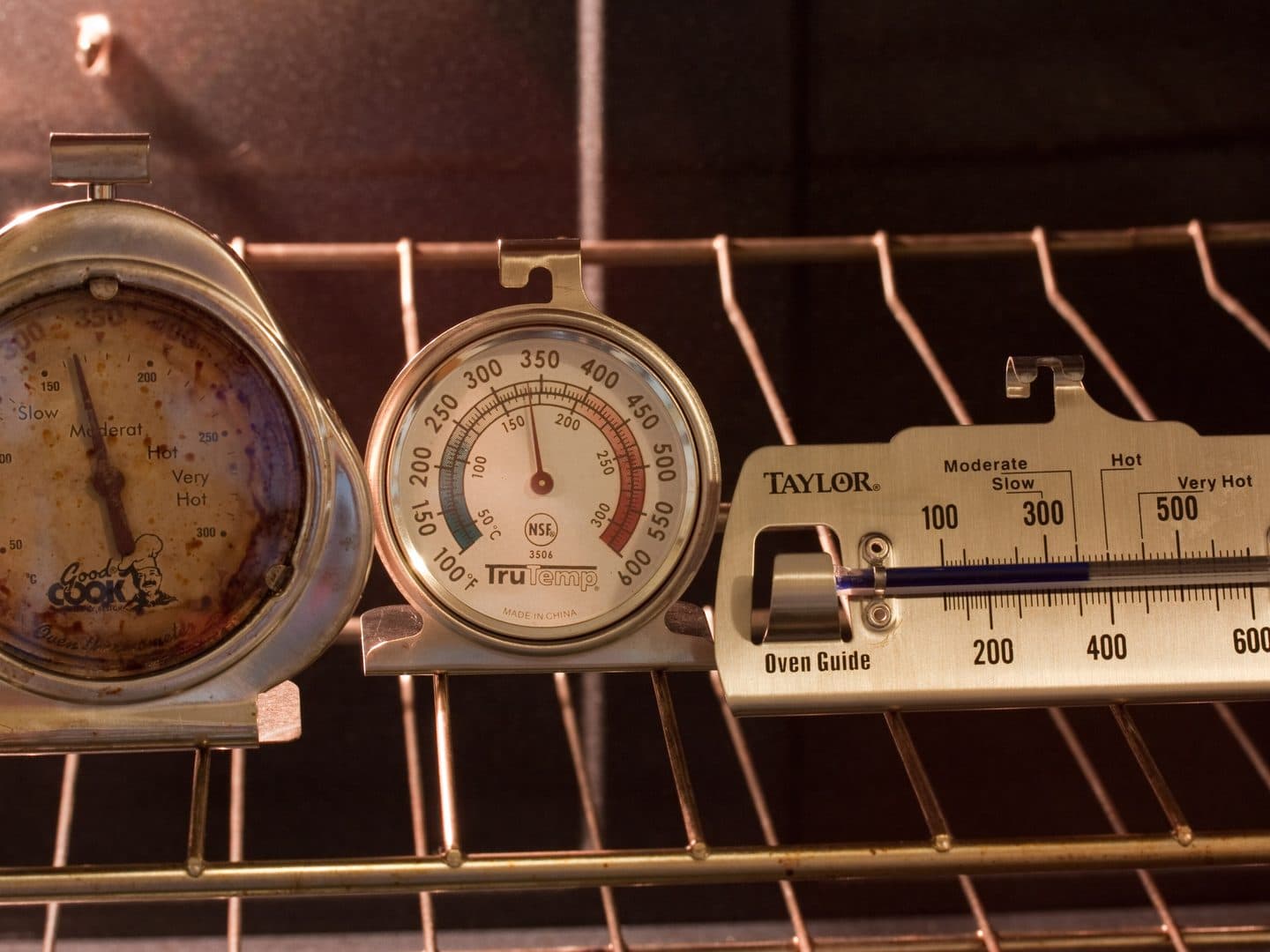
- Preheat your oven well past the beep. This one change fixes more sad pizzas than every other tip on this list combined. Your oven announces itself the moment the air hits temperature, which is long before the walls, the racks, and the floor of the oven have caught up. All that metal is the thermal battery that browns the bottom of a crust, and it charges slowly. Give it another ten minutes after the beep.
- Bake your pizza from frozen. No thawing, no sitting on the counter while you find the wine opener. A pizza that warms up on the counter sweats, creating a film of condensation on the exact surface you're trying to dry out.
- Get the crust as close to bare metal oven racks as the cooking instructions allow. Check the instructions first, but if you're given the choice, straight on the oven rack beats every pan in your kitchen. A room-temperature sheet pan is a heat suck, and every degree it pulls out of the crust is a degree that isn't browning it. If you want a pan under your pizza for peace of mind, preheat the empty pan along with the oven and slide the pizza onto it hot.
- Use the lower-middle rack. The bottom element does the radiating, and the crust is the part that needs convincing. Up top you'll get gorgeous cheese sitting on a crust that never quite committed.
- One pizza at a time. Two pizzas double the moisture load and halve the oven's ability to recover, so both come out worse than either would have alone. Feeding a crowd, bake pizzas back to back and eat in shifts.
- Watch the cheese, not the clock. You're looking for bubbling with golden-brown spots and deep golden crust edges. That's it, that's the doneness cue. The number on the box is written for the slowest oven in America, and yours might beat it by four minutes or trail it by six. The cheese knows. The clock is guessing.
The one move that changes everything
Here's the part almost everybody skips, and the big one we promised. When the pizza comes out, move it onto a wire rack and leave it alone for two or three minutes before you cut it.
A pizza fresh out of the oven keeps venting steam out of its underside no matter where you put it. On a rack, that steam falls away into the room. On a cutting board or a plate, it hits a flat cold surface, condenses, and gets reabsorbed straight back into the crust you just spent twenty minutes drying out. Same pizza, same oven, completely different bite. Two minutes on a rack costs nothing and is the highest-return move in this entire article.
Once the pizza has rested, it's time to top it. Anything wet goes on after the bake, never before. The hot honey packet that comes with Peppin' Ain't Easy is meant to be drizzled once the pizza is out and resting, and the same goes for olive oil, chili oil, fresh basil, and whatever else you were about to put on your pizza at minute one.
None of this is clever. A hot oven, direct contact, and a couple of minutes of patience at the end, which is roughly the same list that made the crust worth crisping in the first place. We cold-ferment our dough for a full day and then some before it ever sees an oven, so asking for four more minutes of your attention feels fair.
Now that you know how to cook the perfect frozen pizza, your oven has ten quiet minutes of preheating to fill. Here's a blistered broccoli side your oven can handle while it's heating up for the pizza, and it's out and on the table before the pizza goes in.
Now put it to work.